
Therapy and Consultation
Helping people to heal and grow in their lives.
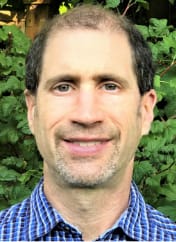

EMDR is the foundation of my clinical work. Over two decades of practice, I've found that EMDR's power comes not just from the protocol itself, but from the parts-based, attachment-oriented, and somatic approaches that can be integrated to deepen and extend the work.
Rather than offering separate therapies, I draw on the approaches below as tools that enhance and support the EMDR process. The goal is always the same: helping you heal more completely and live more freely.
These approaches work directly with your nervous system to process and release painful emotions, traumatic memories, and the deeply held beliefs that fuel painful symptoms. Each integrates naturally with EMDR, and I use them as the clinical situation calls for.
The foundation of my work. EMDR is a highly researched, evidence-based therapy that helps the brain process stuck traumatic material — resolving painful symptoms at their source rather than just managing them. Learn more about EMDR Therapy →
Developed by Dr. Philip Manfield, the Flash Technique reduces the distress level of traumatic memories without requiring you to focus directly on the painful material. Particularly valuable for highly disturbing memories or when you have strong avoidance, it's often used on its own or in conjunction with standard EMDR. Learn more about the Flash Technique →
A specialized EMDR protocol designed for working with early childhood trauma — the kind that occurred before language developed and that can't be accessed through standard memory-based processing. This protocol adapts the EMDR approach to reach developmental experiences that the standard protocol may not fully address. Learn more about the Early Trauma Protocol →
Brainspotting is a powerful somatic approach to trauma processing that works through the connection between eye position and the body's stored trauma responses. It integrates naturally with EMDR as a complementary path for deeply embodied or pre-verbal trauma. Learn more about Brainspotting →
Energy Psychology encompasses a range of approaches that work with the body's energy system to reduce emotional distress and support trauma processing. Used selectively as an adjunct to EMDR, these techniques can help address blocks, regulate the nervous system, and be supportive if you respond well to somatic and energetic interventions. Learn more about Energy Psychology →
Many psychological struggles involve internal conflict — parts of us that want to heal alongside parts that feel safer staying protected. Parts-based approaches work directly with this inner landscape, helping different aspects of self communicate, heal, and integrate.
While these approaches can be used on their own — and I do sometimes use them that way — parts work integrates powerfully with EMDR. Working with parts within the EMDR framework often deepens processing, helps resolve blocks, and creates more lasting change than either approach alone.
IFS is one of the most well-developed and widely recognized parts-based approaches in contemporary psychotherapy. It works with the internal system of parts — including protective parts, exiled parts that carry pain, and the compassionate Self that can lead the healing process.
My IFS training has been specifically focused on EMDR-IFS integration — not IFS as a standalone approach, but IFS and EMDR used together in a way that draws on the strengths of both. In practice, this means using IFS to understand and work with the internal system, and EMDR to process the underlying traumatic experiences that parts are organized around. The combination is particularly powerful for complex trauma, where protective parts can block standard EMDR processing.
Ego State Therapy, developed by John and Helen Watkins, works with the different ego states — or self-states — that develop over the course of a person's life, particularly in response to trauma. Rather than seeing these states as pathological, Ego State Therapy understands them as adaptive responses that helped the person survive difficult experiences. Integration occurs as these states communicate, negotiate, and ultimately work together. Integrated with EMDR, ego state work is particularly valuable when parts conflicts emerge as blocks to trauma processing.
Gestalt approaches — particularly two-chair work and dialogue between parts — integrate naturally into EMDR processing when you're experiencing internal conflict, ambivalence, or parts-based dynamics. Rather than a standalone therapy, Gestalt techniques are used as needed to facilitate deeper processing within the EMDR framework. Learn more about Gestalt Therapy →
Attachment wounds — the emotional deficits that develop when essential childhood needs for safety, love, and connection go unmet — require a different kind of healing than event-based trauma. The approaches below are specifically designed to address these developmental gaps, and each integrates powerfully with EMDR.
The DNMS was developed specifically for healing adults who carry the effects of childhood trauma and unmet developmental needs. It works by helping you develop internal resources and corrective experiences that address the specific needs that went unmet in childhood — building the internal foundation needed for effective EMDR processing. Learn more about DNMS →
Imaginal Nurturing is a relational EMDR approach that is particularly effective for attachment injuries. It helps you develop the internal experience of nurturing, safety, and connection that early relationships failed to provide — creating the internal resources that make deeper trauma processing possible. Learn more about Imaginal Nurturing →
Developed by Dr. Philip Manfield, Dyadic Resourcing builds internal safety and relational resources through an attachment-based approach. It's especially valuable for people whose early relationships didn't provide a secure base, helping you develop the internal stability needed for effective trauma processing. Learn more about Dyadic Resourcing →
EMDR isn't only for healing the past. It's also a powerful tool for helping you perform at your best in the most important areas of your life.
Performance Enhancement uses EMDR to identify and clear the internal blocks — fear, self-doubt, past failures, limiting beliefs — that get in the way of performing at your potential. Once those blocks are addressed, EMDR's Future Template technique can be used to build confidence, develop mental readiness, and rehearse optimal performance at a neurological level.
Performance Enhancement with EMDR is effective for:
If you want to remove obstacles and perform at a higher level, Performance Enhancement may be exactly what you're looking for. Learn more about Performance Enhancement →
If you're curious about how any of these approaches might fit into your therapy, I'd be glad to discuss it. The right combination of tools depends on your specific situation, goals, and what's getting in the way — and that's exactly what an initial consultation is for.
Phone: (503) 887-3309
Email: Contact form
Office Location: 1832 NE Broadway, Portland, OR 97232
Serving: Portland metro area, including Beaverton, Hillsboro, Lake Oswego, Tigard, West Linn, Milwaukie, Oregon City, Tualatin, Gresham, and Vancouver, WA.
Ross Cohen, MA, LPC, LLC
EMDR Certified Therapist | EMDR Approved Consultant | EMDR Training Facilitator
Virtual EMDR consultation via Zoom — serving clinicians worldwide.
In-person therapy and consultation sessions available at my NE Portland, Oregon office.
Telehealth available for clients throughout Oregon.
